Olive skin is the green, yellow, or gray-green cast your eye sees when your surface coloring blends optically with the undertone beneath it. If your skin has never read as clearly pink or clearly golden, that blend is usually why. A short list of checks, done in natural light, will confirm it and tell you which version of olive you have.
Skip the guesswork. BeautySpark reads your color season from a selfie and generates eye makeup tutorials built around it.Olive Is an Optical Blend of Your Surface Coloring and Undertone
Your undertone is the pigment mix beneath your skin's surface, set by the melanin, hemoglobin, and carotenes your body produces. It stays fixed regardless of a tan, the season, or a bad night's sleep. It runs along a warm-to-cool axis: warm undertones lean golden or peachy, cool undertones lean pink or rosy, and neutral undertones sit somewhere between the two.
Skin is translucent, so light passes through your surface coloring, bounces off the undertone underneath, and returns to the eye as a single blended color. When that surface coloring carries a yellow or green tint, it acts like a filter over the pigment beneath it, and the result reads as olive. That's why colorists call olive an overtone rather than an undertone: it describes what the blend looks like, not what's sitting underneath it.
This blend can form over any undertone. A cool olive comes from a yellow/green surface coloring mixing with a pink or blue base, which produces an ashy, green-gray veil. A warm olive comes from that same surface tint mixing with a peachy or golden base, which produces a richer, green-gold cast.
Because olive is the resulting blend rather than the base pigment, it doesn't set your color season. Seasons are built on the undertone underneath, and your olive cast simply belongs to whichever temperature anchors it. Many guides shorthand olive as a neutral undertone, since the green-gray blend mutes the usual warm and cool cues, but plenty of olive complexions run clearly cool underneath, and plenty run clearly warm.
The Visible Signs of Olive Skin
A few cues point toward an olive overtone before you run any test:
- Your skin shows a green, yellow-green, or gray-green cast rather than a clear pink or clear gold tone.
- The skin looks a little muted or softened, rather than sharply light or richly saturated.
- The cast shifts with lighting: it tends to intensify under cool, low-warmth light and recede under warm light.
- Pink or rose still shows through in the cheeks and the thin skin around the eyes, especially on cool olive complexions.
Cool Olive: A Green-Gray Overtone Over a Pink or Blue Base
A cool olive reads as soft green-gray rather than green-gold. The blend gives the skin a gently muted, ashy quality under most lighting, while pink or rose still peeks through on the cheeks and around the eyes. Cool fluorescent or low-warmth lighting can intensify that gray cast and make the complexion look flatter than it does in natural daylight.
Warm Olive: A Green-Gold Overtone Over a Golden or Peachy Base
A warm olive reads as rich green-gold rather than green-gray. The same olive softness is there, but a golden warmth pushes through the surface. Warm light often gives a warm olive a bronzed, honey-adjacent glow, while cool light draws the green cast forward and pushes the gold notes into the background.
Pro Tip
A visible cast is a starting point, not proof. The tests below are what actually confirm an olive overtone and which version you have.
The Tests That Actually Confirm It
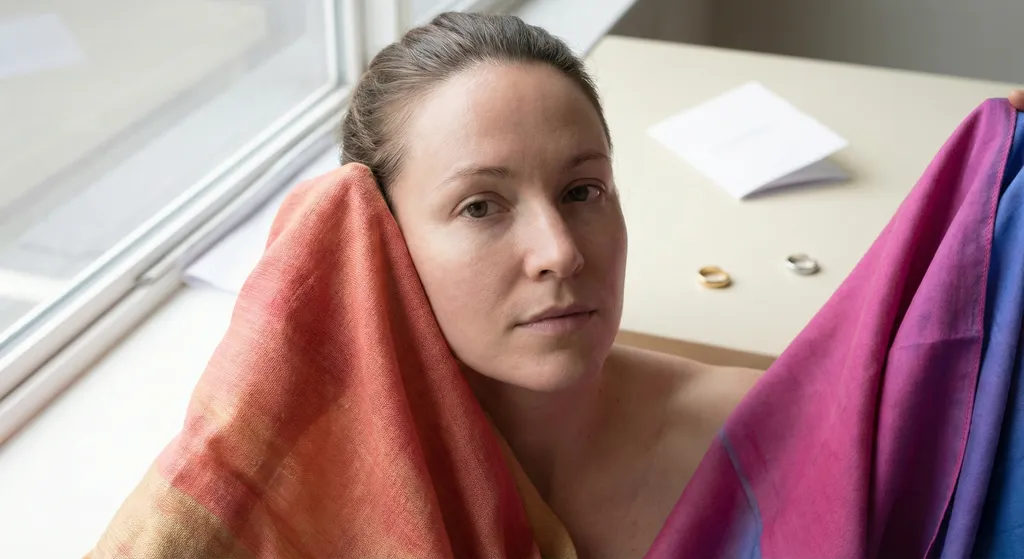
Draping is the primary method, since it reads your undertone directly rather than the surface cast. It's the same test used to find your undertone, and running it first tells you what sits beneath your olive overtone.
The white-paper test is a useful supporting check. Hold a sheet of printer-white paper under your jaw in north-facing daylight. A cool olive tends to throw a gray-green or ashy cast against the paper, while a warm olive tends to throw a yellow-green cast. Because the paper is a neutral reference, the overtone is easier to read against it than against a wall or your own hand.
Jewelry preference can act as a weak tiebreaker, but treat it as a footnote, not a test. Many olives look fine in both gold and silver, since the green cast softens both metals.
Two Tests to Skip
The vein test and the sun-reaction test both show up in older guides, and neither holds up, not just for olive skin. Veins reflect the skin above them rather than the undertone beneath, so what you see depends on skin opacity, capillary depth, and lighting as much as anything else. That's why olive complexions can show blue-green veins regardless of their actual undertone.
Skip the sun-reaction test too. The common assumption is that tanning easily points to a warm undertone and burning easily points to a cool one, but it often runs the other way: plenty of people who tan easily are distinctly cool-toned, and plenty who burn quickly are warm-toned. How skin responds to sun comes down to melanin levels, skin depth, and genetics, not color temperature.
What Having Olive Skin Means for Your Makeup
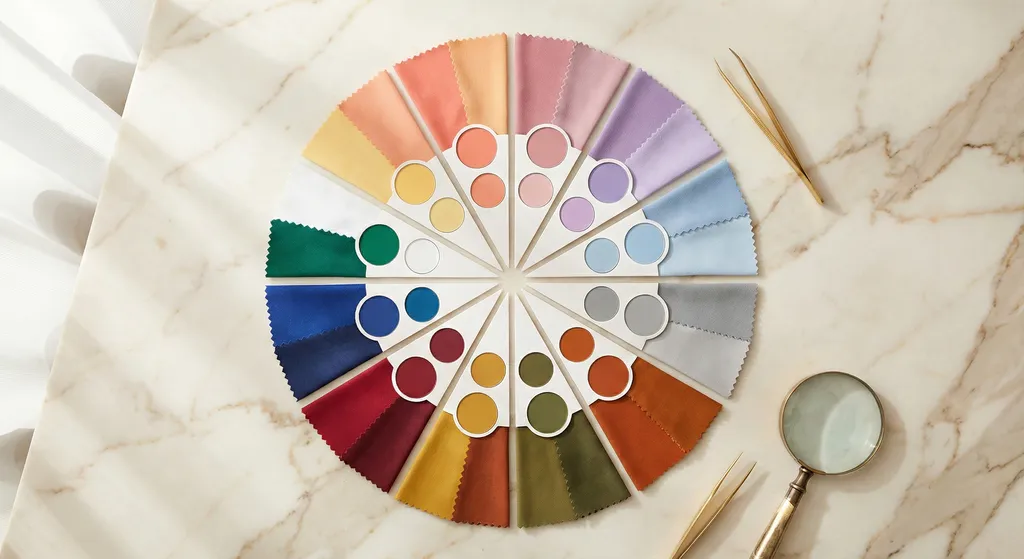
Olive skin doesn't need its own separate set of rules. Defaulting every olive complexion to terracotta, warm brick, or sun-kissed bronzer overrides seasonal analysis and can leave cool olives wearing colors their season calls unflattering, even though those same shades genuinely suit warm olives. Your seasonal palette is the safest starting point. Some people with an olive complexion enjoy the more muted, dusty shades within their season, but that's not a rule, and brighter colors can look just as striking depending on your season.
Foundation: Match the Undertone, Not the Exact Olive Cast
The shade doesn't need to replicate your green cast to work. When the undertone matches, foundation sits quietly on the skin, especially at sheer to medium coverage, where the natural cast still shows through. Chasing an exact match to your olive overtone tends to land on an ashy or gray foundation instead.
Swatch two or three candidates on the jawline, step into natural light, and blend each one in. The shade that disappears is usually the match, but it is not a strict rule. As long as the undertone is correct, a shade that is slightly off but looks perfectly natural once blended is still a successful match. Most people get a consistent match against both the jaw and the neck, but if your face and neck read differently, matching to whichever gets you a uniform result with less blending is a reasonable call. A small drop of color-correcting mixer can nudge an almost-match into place, but if you're reaching for a lot of it, the base shade is wrong.
"Olive-targeted" foundation lines are worth a caution. Several brands formulate dedicated olive or yellow-green shades, and the results are uneven: over-corrected greens can pull ashy in photos, and some of these lines skew warmer than a person's actual undertone.
Eyes, Blush, and Lips
None of these need a separate olive-specific list. Your seasonal palette already covers them. Depending on your season, brighter shades can look just as flattering as muted ones, so there's no need to default to dustier tones or seek out a different category of products.
BeautySpark reads your color season from a selfie and builds eye makeup tutorials around your sample season colors, olive overtone included.Frequently Asked Questions
Find Your Color Season, Olive Overtone Included
BeautySpark analyzes your color season from a selfie and generates personalized eye makeup tutorials around sample season colors, built for every undertone and overtone.